
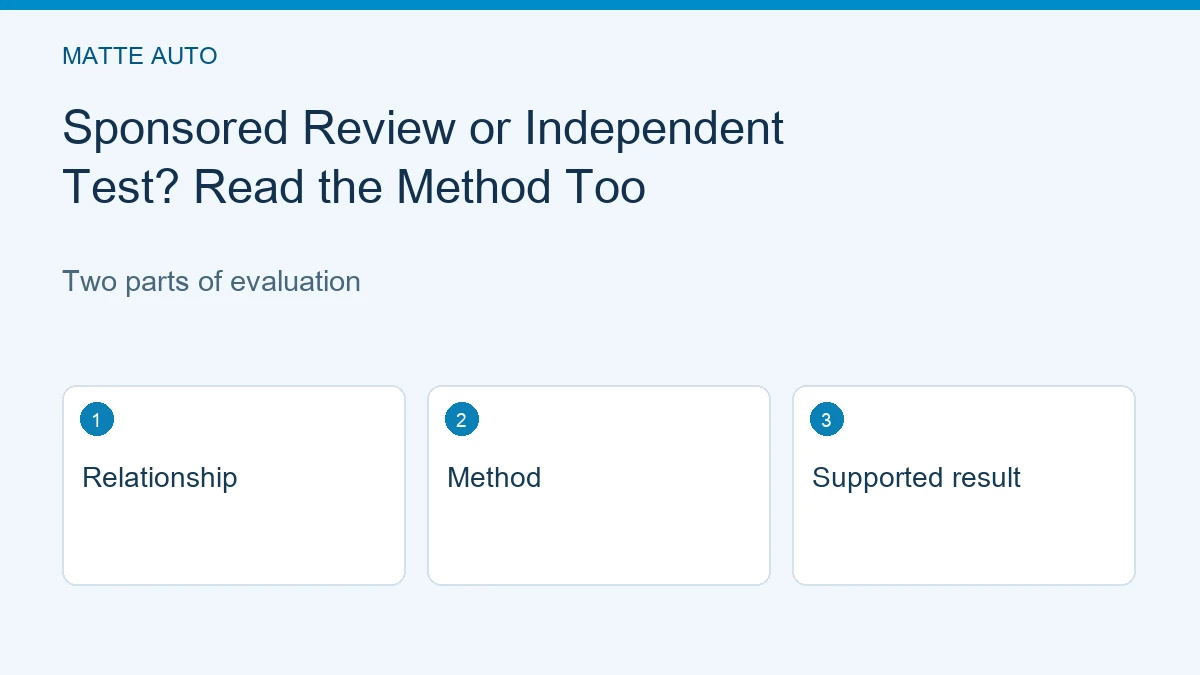
Knowing that a review is sponsored is useful context, but the next question is how its conclusions were produced. A label alone neither establishes an appropriate method nor explains what was actually tested.
Look for the relationship
Check whether the product, payment or other commercial arrangement is disclosed. Keep that context with the result when comparing sources. Do not describe a brand’s own demonstration as independent simply because it appears on another page.
Ask the same evidence questions
Identify the products, conditions and tasks assessed. Look for an explained method behind any numerical claim. A sponsored comparison can still contain useful identified observations, while an unsponsored opinion can still lack the detail needed to support a broad conclusion.
Apply only the supported conclusion
Keep results attached to the specific equipment and conditions. Do not turn a comparison into worldwide legal acceptance or a fit confirmation for an untested vehicle. Those are different questions requiring their own information.
- Commercial context
- Method and conditions
- Scope of the conclusion
Read the relationship and the evidence together. This produces a more useful assessment than accepting a promotional result uncritically or treating every disclosed collaboration as if it said nothing at all.

